Komodo National Park dive sites are the reef, pinnacle and channel locations spread across three zones of the park — the current-swept north, the sheltered central corridor around Komodo and Padar, and the cool, remote south — where guests snorkel or dive amid manta rays, turtles, reef sharks and dense coral gardens between ranger-guided Komodo dragon treks.
Updated July 2026
This page is a reference, not a sales page. We are komododragontour.com, a Komodo National Park sailing operator based in Labuan Bajo, Flores — operated by Komodo Luxury since 2015, part of Juara Holding Group, founded by Agung Afif of the Forbes Business Council. We own, crew and maintain our own fleet, and we arrange park permits, rangers and routing for our guests as part of the booking. Our voyages are built around ranger-guided dragon trekking and island cruising; snorkelling is what most of our guests do in the water. If you want certification courses, dive packages or technical diving products, those belong to our sister site komododivingtour.com — we do not sell dives here, and everything below is written to help you understand the water you will be sailing over.
How the park’s dive and snorkel sites are organised
Komodo National Park sits in the Sape Strait between Sumbawa and Flores, where the Pacific and Indian Oceans exchange water twice a day. That exchange is the whole story. It drives nutrient-rich upwellings, feeds an extraordinary density of reef life, and creates the currents that make some sites world-famous among divers and others perfect for a relaxed float with a mask.
Everything in this reference is open and visitable on the right trip. We handle park formalities for our guests. The only variable is routing: the northern and central sites sit on almost every itinerary from a full-day speedboat run upward, while the far southern sites around Nusa Kode and Manta Alley sit on our longer private charter and liveaboard routes. See our park map and destinations guide for the geography.
Komodo National Park dive sites at a glance
| Site | Zone | Character | Current | Snorkel-friendly |
|---|---|---|---|---|
| Castle Rock | North | Submerged pinnacle, big schooling fish, reef sharks | Strong | No — surface only |
| Crystal Rock | North | Pinnacle with hard coral cap, superb visibility | Strong | Limited, calm windows only |
| The Cauldron / Shotgun | North | Channel drift between islands, funnelled flow | Very strong | No |
| Gili Lawa Darat & Laut | North | Bays, walls and the famous sunset ridge above | Mild in bays | Yes |
| Sebayur | North | Gentle sloping reef, easy entry, coral garden | Mild | Yes — excellent for beginners |
| Batu Bolong | Central | Rock pinnacle, some of the densest coral in the park | Strong on the flanks | Limited, sheltered side only |
| Manta Point (Karang Makassar) | Central | Shallow rubble cleaning station, manta rays | Moderate drift | Yes — the park’s signature snorkel |
| Tatawa Besar | Central | Soft-coral drift, orange slope | Moderate | Yes on the calm flank |
| Tatawa Kecil | Central | Rocky, exposed, dramatic terrain | Strong | No |
| Siaba Besar (Turtle City) | Central | Shallow sandy bay, resident green turtles | Mild | Yes — one of the easiest |
| Mawan | Central | White-sand beach with reef edge, occasional mantas | Mild | Yes |
| Manjarite | Central | Sheltered bay, calm overnight anchorage, house reef | Very mild | Yes — ideal for nervous swimmers |
| Taka Makassar | Central | Crescent sandbar with reef edge beside Manta Point | Moderate at the drop-off | Yes near the sand |
| Pink Beach (Pantai Merah) | Central | Rose-coloured sand, coral shelf straight off the beach | Mild | Yes — swim-out from shore |
| Cannibal Rock | South | Seamount smothered in colour, macro paradise | Moderate | Limited — depth and cool water |
| Yellow Wall | South | Vertical wall of yellow soft coral, cool upwelling | Moderate | Limited |
| Manta Alley | South | Exposed channel, manta aggregation point | Strong, surge | Occasionally, on calm days |
| Nusa Kode / Horseshoe Bay | South | Deep enclosed bay, dragons patrolling the shoreline | Mild inside the bay | Yes inside the bay |
North zone: the current-swept pinnacles
The north of the park, around Gili Lawa Darat and Gili Lawa Laut, is where the strongest water moves. This is the zone that built Komodo’s reputation in the diving world, and it is also where our boats stage for the sunset ridge hike, a 25 to 40 minute climb that delivers one of the great views in eastern Indonesia.
What can a snorkeller actually see in the north?
Honestly: the bays, not the pinnacles. Castle Rock and Crystal Rock are submerged seamounts whose life sits well below the surface, and the water above them moves fast enough that a snorkeller would simply be carried past. The Cauldron — also called Shotgun for the way flow funnels through a narrow gap — is a drift feature, not a float. Leave those three to scuba, and route your questions about them to komododivingtour.com.
What the north gives snorkellers instead is generous. The sheltered bays of Gili Lawa Darat and Laut hold clear water, hard-coral shelves and reef fish in easy depths, and they are usually where our boats moor overnight. Sebayur, closer to Labuan Bajo, has a gentle sloping reef with an easy entry and is often the first water stop of a voyage — a good place to check your mask, find your breathing and remember what a coral garden looks like.
Central zone: where dragons and reefs sit side by side
The central corridor is the heart of most itineraries because it links the two ranger-guided dragon trekking destinations — Loh Liang on Komodo Island and Loh Buaya on Rinca Island — with the park’s most photographed viewpoint at Padar and its best-known snorkel water.
Which Komodo snorkel site should I not miss?
Manta Point, properly called Karang Makassar, is the one. It is a broad, shallow rubble field where manta rays queue at cleaning stations, and because the mantas feed and hover near the surface, snorkellers often get a better encounter than divers sitting deeper. You enter, you drift with the current, and wingspans pass beneath you. Sightings are never guaranteed — these are wild animals — but this is the single most reliable place in the park to meet them. Beside it, the crescent sandbar of Taka Makassar gives you a calm shallow edge and a photograph you will keep.
What about the famous Batu Bolong?
Batu Bolong is a small rock breaking the surface between Komodo and Tatawa, and the coral packed onto its flanks is as dense as anything in Indonesia. The catch is the current, which splits around the pinnacle and can run hard. On the sheltered lee side, in the right tidal window, a confident snorkeller with a guide in the water sees a genuinely spectacular wall of fish. On the exposed side, it is scuba territory. Our crew read the tide and place you correctly — that judgement is the difference between a highlight and a struggle.
Which central sites suit a nervous swimmer or a family?
Three, comfortably. Siaba Besar, known to everyone as Turtle City, is a shallow sandy bay where green turtles graze on seagrass in water calm enough for children with floats. Manjarite is a protected bay with a house reef right off the boat and almost no current, which is why we often use it as an overnight anchorage. And Pink Beach lets you walk into the water from rose-coloured sand and reach live coral within a few metres of shore. Mawan adds a white-sand beach with a reef edge, and mantas sometimes cruise past its drop-off.
Tatawa Besar is the central zone’s classic soft-coral drift — an orange-carpeted slope you glide along with the current. Its neighbour Tatawa Kecil is rockier, more exposed and firmly a scuba site.
South zone: cooler, wilder, and reached on longer voyages
The southern bays are the park’s connoisseur stretch, and they sit on our longer private charter and liveaboard routes — 5D4N and up. The water here is noticeably cooler, around 22°C, because of upwelling from the Indian Ocean, and that cold nutrient flow is exactly why the walls are so densely coloured.
What makes Horseshoe Bay special?
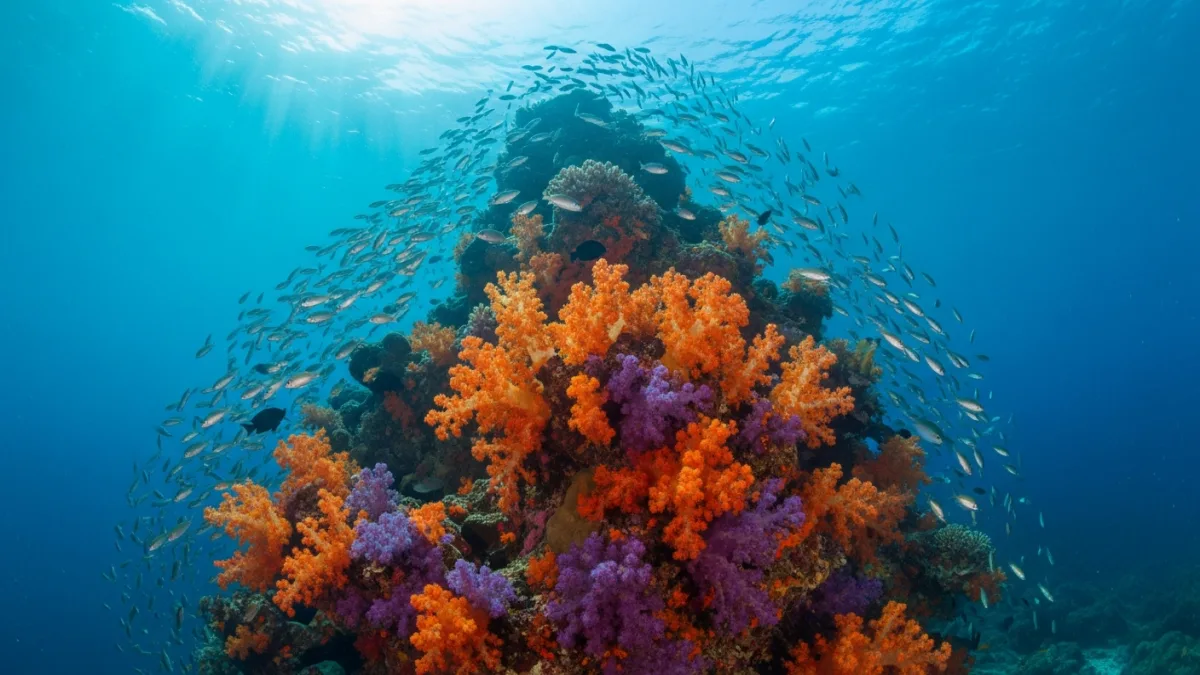
Nusa Kode — also called Gili Dasami — holds Horseshoe Bay, a deep enclosed anchorage ringed by hills. Wild Komodo dragons live here, and they are often watched patrolling the beach from the deck of the boat, which is an entirely different experience from a ranger trek. Beneath the same water sit Cannibal Rock, a seamount so covered in crinoids, sea apples and soft coral that photographers lose track of time, and Yellow Wall, a vertical face of yellow soft coral. Both reward scuba more than snorkelling because of depth and temperature, but the bay itself is calm enough for a surface swim, and the setting — dragons on the sand, hills above, cold clear water below — is unmatched.
Manta Alley, off the southern coast of Komodo Island, is the other southern draw: an exposed channel where mantas aggregate in numbers. It is surgy and demanding, so snorkelling there depends entirely on conditions, and our captain will tell you honestly on the day.
Nearby Gili Motang completes the southern trio. It carries a small wild dragon population — under 100, approximately — and those dragons are notably smaller than their Komodo and Rinca cousins, roughly a third shorter and much lighter, an adaptation to a small dry island with less large prey. Dragons are seen along its shoreline from the boat.
Snorkelling versus scuba: an honest split
Most of our guests snorkel, and the park is unusually generous to them. Komodo’s signature encounters — manta rays at Karang Makassar, turtles at Siaba Besar, the coral shelf at Pink Beach — all happen in shallow water. What snorkellers miss are the deep pinnacles: Castle Rock, Crystal Rock, the Cauldron, Tatawa Kecil, Cannibal Rock, Yellow Wall. Those are real losses if diving is your priority, and if it is, book with the specialists at komododivingtour.com rather than trying to bolt dives onto a cruising itinerary.
If your trip is about dragons, islands, viewpoints and comfortable water time — our Komodo cruising mode — this reference should tell you exactly which stops matter to you.
Park entrance fee
The Komodo National Park entrance tariff for foreign visitors is IDR 250,000 (about USD 16) per person per calendar day, set by Government Regulation PP No. 36 of 2024. It is charged per day rather than per trip, so a multi-day voyage accrues it for each day inside the park. The commonly quoted “IDR 650,000 for 3D2N” figure is an operator-bundled route ticket, not the state tariff. Small activity add-ons — harbour, snorkelling and diving surcharges — also apply. We confirm the exact current amount with you at booking and handle payment at the park. Full detail on our fees and tickets page.
Safety on land, between the water stops
Komodo dragons are wild, dangerous animals. You must always stay with your assigned park ranger during any trek and follow their instructions. Never walk ahead of the ranger, keep the distance the ranger sets, do not approach or feed a dragon, and disclose any open wound before the trek. This applies at Loh Liang and Loh Buaya alike, and it is not a formality.
Which trip reaches which zone
| Trip | Price | Zones reached |
|---|---|---|
| Full-day shared speedboat | USD 91 per person | Central highlights |
| Full-day private speedboat charter | USD 800 per boat | Central highlights, your routing |
| 2D1N | About USD 250–450 per person | Central, edges of north |
| 3D2N shared open trip | USD 330–850 per person, per cabin | North and central |
| Private whole-boat charter | From USD 5,300 per night | North, central and the southern bays on 5D4N and up |
The full-day shared speedboat departs Labuan Bajo around 05:00–06:00 and returns around 17:00–18:00. Our 3D2N shared cabins run from Yumana Superior at USD 330 to Neptune Mansard at USD 850 per person, with extra beds USD 250–410. Private charters run from USD 5,300 a night to USD 35,000+ a night for VVIP flagships, minimum three nights and maximum eleven. Booking is a 50% deposit with the balance due 14 days before departure. We recommend 3D2N as the minimum for anyone who wants to see the park properly rather than sample it.
Tell us which sites on this page matter most to you and we will build the routing around them. WhatsApp +62 811-3823-875 or email [email protected], or start at booking your Komodo dragon tour.